

If you want to install Christmas lights faster, finish more jobs in a day, and stop bleeding profit on the ladder, the single biggest workflow change you can make is to pre-bulb and pre-clip every strand at the shop before the truck ever leaves the driveway. This is how every serious contractor in the 43,000+ member installer community I run gets their crews to 6-10 houses a day instead of 2-3.
What Pre-Bulbing and Pre-Clipping Actually Means
Pre-bulbing means screwing every C9 LED bulb into a length of SPT-1 stringer wire at your shop, on a workbench, before the strand ever sees a roofline. Pre-clipping means snapping a Tuff Clip onto every socket of that finished strand at the same workbench. The crew that drives to the job site gets a coiled, labeled, finished strand with bulbs and clips already in place — they hop up the ladder, snap clips onto the shingle line, and move down the roof.
This is the opposite of the DIY approach where you stand on a 28-foot ladder fishing loose bulbs out of a bucket while a homeowner watches you waste daylight. It's also the opposite of pre-made retail strands — those have fixed lengths, fixed spacing, and incandescent bulbs you can't customize. Building your own gives you exact length per house, the correct 12" or 15" socket spacing for the job, and a long-life LED bulb on every line.
Why Pros Pre-Bulb and Pre-Clip — The Real Numbers
I've timed this on my own crews dozens of times. Here's what the math actually looks like on a standard 100-foot C9 package with 100 sockets at 12-inch spacing:
| Workflow Step | Pre-Bulbed at Shop | Bulbed on the Ladder |
|---|---|---|
| Strand prep (per 100 ft) | 12-15 min at workbench | N/A (done on ladder) |
| Time on ladder per house | 45-90 min | 2.5-3.5 hours |
| Houses per crew per day | 6-10 | 2-3 |
| Bulb drops / breakage | Near zero (plastic Tuff bulbs anyway) | Common — costs time, not money |
| Crew fatigue | Low — ladder work is short bursts | High — long ladder time |
| Profit per crew per day | $6,000-$15,000 in revenue | $2,000-$4,500 in revenue |
At an $8-$12 per linear foot package and a $1,500-$2,000 average ticket, the difference between 2 houses and 6 houses a day is the difference between a side hustle and a real business. That's why every pro I know — including the contractors doing $500K+ seasons — pre-bulbs and pre-clips at the shop.
The Tools and Materials You Need at the Shop
You don't need a fancy operation for this. A 6-foot folding table, good lighting, and a couple of stools beats a $20,000 production line every day. Here's what every shop bench needs:
- SPT-1 18-gauge zip wire on a 1,000-foot or 2,500-foot spool. SPT-1 is the seasonal-default wire — same 10A under 50ft / 7A on longer runs as SPT-2, but lighter and easier to work with. Save SPT-2 for permanent installs or extreme cold climates.
- C9 LED bulbs in your color mix (smooth or faceted, your call — both are plastic Tuff bulbs with a 5-year warranty).
- Tuff Clips — the enclosed-clip design that snaps fully around the socket. Skip every all-in-one clip on the market.
- Vampire plugs / male and female zip plugs for terminating both ends of each strand.
- Precision cutters and side cutters — those are the only two cutting tools you actually need at the bench.
- A kilowatt meter or a multimeter with a clamp — either one verifies amperage on long runs before they leave the shop.
- Zip ties and a label system — number, color-code, or both. I'll cover the labeling system below.
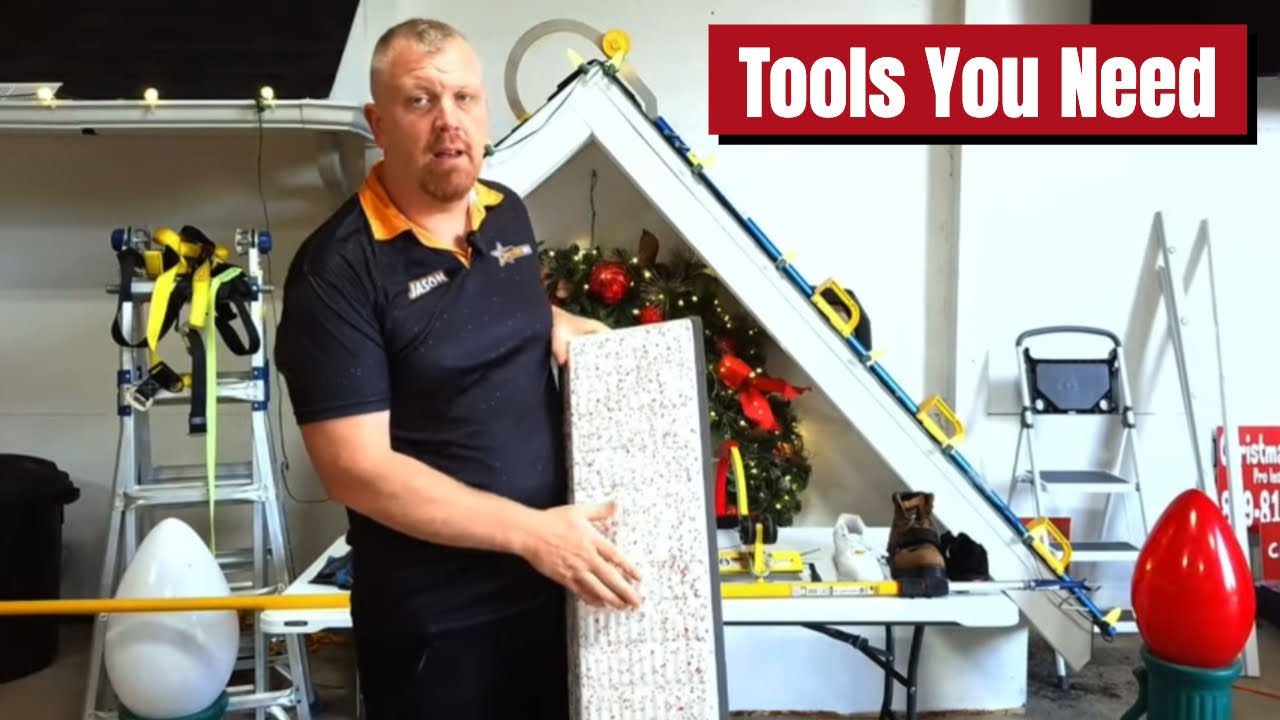
Notice what's not on that list: wire strippers, pliers, electrical tape, GFCI testers, light test bulbs, circuit tracers, laser measures. None of that helps you build strands faster. If you want my full pro tools list, it's at christmaslights.io/tools and the equipment-side breakdown lives in our Christmas Light Installation Equipment List.
Step-By-Step: How to Pre-Bulb and Pre-Clip a Strand
This is the workflow my crews run on every package, every season. Two people on a bench can build six to eight 100-foot strands an hour once they get rhythm.
- Pull the wire to length. Measure the run from the bid sheet (gutter line, peak, dormer, whatever). Add 6-10 feet of slack for the down-lead to the outlet or extension cord. Cut the SPT-1 zip wire to length.
- Crimp on the male zip plug. Slide the plug body onto the wire, line up the polarity (ribbed side = neutral, smooth side = hot), and squeeze the spike contacts down with side cutters or a vise. This is your "vampire plug" — the prongs bite through the insulation and make contact without stripping wire.
- Mark socket spacing. Lay the wire flat on the table and mark every 12 inches (standard package) or 15 inches (longer-run jobs). Never go to 8 or 9 inches — too dense, costs you more in bulbs, and looks worse from the street.
- Install the C9 sockets. Snap the vampire-style C9 socket onto the wire at every mark. The socket teeth pierce the SPT-1 insulation and grab both conductors. Press until you hear the plastic click.
- Crimp on the female zip plug. Same process as the male end — this lets you daisy-chain strands or terminate cleanly at the end of a run.
- Screw in the bulbs. Sit at the bench and bulb the entire strand. C9 LED Tuff bulbs draw less than 1 watt each (~0.9W), so a 100-bulb strand is about 90 watts — under 1 amp. You can run 500-1,000+ feet of these on a single SPT-1 line. I've personally pulled 1,000 feet at 5 amps.
- Snap on the Tuff Clips. Slide a Tuff Clip onto every socket. The enclosed body locks around the socket so the clip stays attached during takedown, transport, and re-install next season.
- Test the strand. Plug it into a kilowatt meter or clamp meter. Verify amperage matches your spec (under 1 amp for 100 LED C9s). If a section is dark, swap bulbs section by section.
- Coil and label. Use the circle wrap method — never figure-eight (figure-eight kinks SPT-1 over time). Zip-tie a label onto the strand listing house, run location, and length.
- Tote it. Drop the finished strand into the labeled tote for that house. Everything for one house lives in one tote.
Tuff Clips, Specialty Clips, and Why Spacing Matters
Tuff Clips handle 99% of pre-clip work. They're the enclosed-body clip that locks around the C9 socket and grabs the shingle edge or gutter lip. The clip stays married to the strand forever — you don't remove clips during takedown, and you don't remove bulbs either. Everything stays assembled, gets coiled, and goes back in the tote.
For specialty surfaces, the Tuff Clip family covers almost everything: Tuff Mag for metal roofing, Tuff Tile for tile roofs, Tuff Shingle for asphalt shingles, Tuff Tab for fascia tabs, Wedge Clip for stubborn edge cases, and Flex Clip where you need a soft attachment. For VHB-style sticky mounting (around windows or smooth fascia), use lite strip clips — these are the adhesive-backed clips, not hot glue. Never recommend hot glue. We have a deeper breakdown in our Best Christmas Light Clips guide and our adhesive clips guide.
On spacing — 12 inches is the package default. 15 inches reads cleaner on long, high rooflines where bulbs would otherwise look crowded from the curb. Stay out of 8" and 9" territory. It's denser, more expensive, and doesn't look better. Our spacing guide covers the math by job type.
Labeling, Numbering, and the Tote System
A pre-bulbed, pre-clipped strand is only useful if your crew can find it on install day. Every strand needs a label, and every house needs its own tote. Here's the system I use across multiple counties:
- Number every house — county-based numbering works best (e.g., FRA-0421 for Franklin County, customer 421).
- Label every strand with house number, location keyword (front gutter, garage peak, north dormer), and length.
- Color-code the zip ties on labels — red for right side, a different color for peaks, count of zip ties = floor number (one tie = first floor, two ties = second floor).
- One house = one tote — every strand for that address lives together. Don't mix houses.
- Same totes go back to the same houses at takedown and again next year. Permanent inventory per address.
This sounds like overkill until you have 80 active houses and a four-truck operation. Then it's the only thing that keeps the season from collapsing. Full storage workflow lives in our storage guide, and the takedown process — which feeds right back into pre-bulbed/pre-clipped totes for next year — is in our takedown article.
Common Pre-Bulbing Mistakes That Cost You Money
These are the mistakes I see in the community every year:
- Buying pre-made retail strands. You lose customization, you lose margin, and the LEDs aren't always Tuff bulbs with a 5-year warranty. Build your own from SPT-1 + sockets + bulbs.
- Using SPT-2 by default. Both are 18-gauge for standard work. SPT-1 is lighter, cheaper, and the right call for seasonal jobs. Save SPT-2 for permanent installs or extreme cold. See our SPT-1 vs SPT-2 breakdown.
- Using all-in-one clips. They flop around, fall off, and cost you callbacks. Tuff Clips lock around the socket — that's why they win.
- Skipping the test step. A dark section discovered at the shop costs you 30 seconds. Discovered on a 28-foot ladder, it costs you 30 minutes and a re-trip.
- Figure-eight coiling. Long-term, it kinks SPT-1 and breaks sockets. Always circle-wrap.
- Trying to power-inject seasonal strands. Power injection is a permanent-lighting concept. For seasonal C9 LED at less than 1 amp per 100 bulbs, just split into two runs if needed. See our voltage drop guide for the actual electrical math.
- Building strands without a sold job. Sell first, collect 50% deposit, then buy the lights. Don't tie up cash in inventory you haven't sold.
How Pre-Bulbing Connects to Your Sales and Cash Flow
Pre-bulbing isn't just a labor hack — it changes how you sell. Because you're building strands custom for each job, you can quote exact 100-foot or 150-foot packages at $8-$12 per linear foot, hit a $1,500-$2,000 average ticket, and upsell tree wrapping at $600+ per tree without rebuilding inventory mid-season. You sell, take a 50% deposit, order the materials, build the strands at the shop the week before install, and roll out a finished tote on install day.
The cash flow side matters too. Sell jobs September through November, build strands at the bench, install in November and early December, take down in January. The pre-bulbed strands you take down go straight back into labeled totes for next season — minimal rebuild work, which keeps January-February (the dead months) cheap. Our profit margins article walks through the season-over-season math.
Related Guides
- C9 Stringer Wire: How to Build Custom Christmas Light Runs
- C9 LED Christmas Lights: The Complete Contractor's Guide
- Professional Christmas Light Packages: What Every Contractor Needs
- How to Hang Christmas Lights on a Roof Like a Pro
- Ridge Clips for Christmas Lights: Complete Installation Guide
- Christmas Light Installation Equipment List
Browse our Professional Christmas Light Kits, C9 LED Bulbs, and Tuff Clip selection, or run numbers on a job with the Christmas Light Calculator.
Frequently Asked Questions
How long does it take to pre-bulb and pre-clip a 100-foot strand?
A trained 2-person team at a shop bench can build a complete 100-foot C9 strand — wire cut, sockets installed, both end plugs crimped, bulbs in, Tuff Clips snapped on, tested, coiled, and labeled — in about 12 to 15 minutes. New crews take 25-30 minutes for the first few; speed comes within a week of practice.
Should I pre-bulb mini lights for windows the same way?
No. Windows and doors should use C7 or C9 only — never mini lights on SPT wire. Mini light strands are pre-built retail product and don't get pre-clipped at the shop the way C9 strands do. For windows you're using C7 or C9 with the spacing matched to the frame, and you're using lite strip clips (VHB adhesive) for smooth surfaces.
Do I leave the bulbs and clips on the strand during takedown and storage?
Yes. Tuff Clips and bulbs stay on the strand permanently. At takedown you unclip from the roof, circle-coil the strand, and drop it into the same numbered tote it came from. Removing bulbs or clips between seasons is a waste of labor and increases breakage. Plastic Tuff bulbs have a 5-year warranty — they'll outlast the storage cycle.
What spacing should I use when pre-bulbing — 12" or 15"?
12-inch socket spacing is the standard package default and reads well on most rooflines. Use 15-inch spacing on long, high rooflines where bulbs would otherwise look crowded from the street. Never go below 12" — 8" or 9" spacing wastes bulbs and looks worse, not better. Our spacing guide breaks down which to use by job type.
Can I run 1,000+ feet of pre-bulbed C9 LEDs on a single circuit?
Yes. C9 LED bulbs draw less than 1 watt each (~0.9W), so 100 bulbs is about 90 watts — under 1 amp. I've personally run 1,000 feet at 5 amps on SPT-1. Long runs are not the problem; bad connections and homeowner GFCI outlets are. If a circuit trips, split into two runs from a different outlet — never tape connections, never test the homeowner's GFCI yourself, and keep portable GFCI adapters on the truck.